

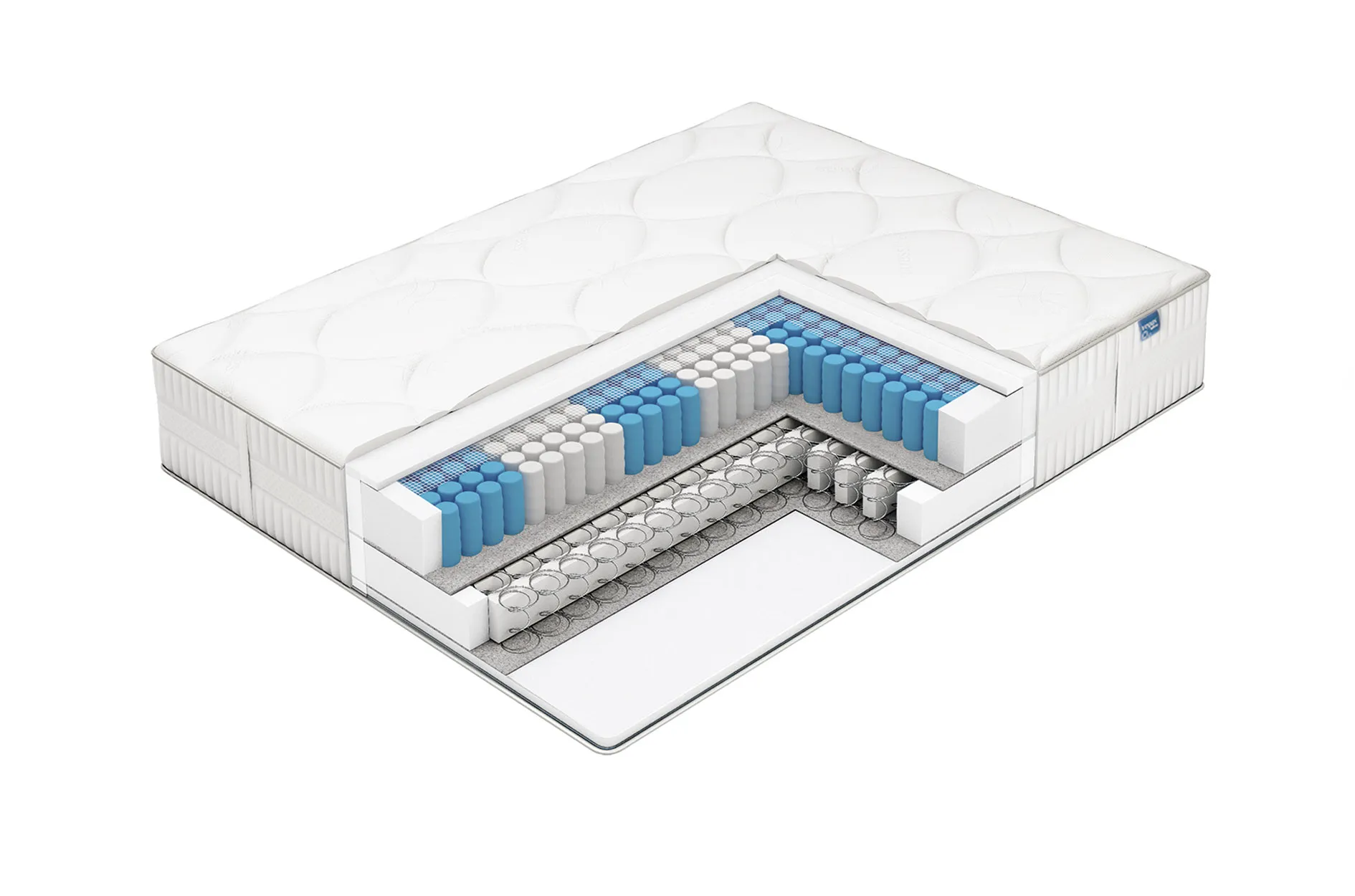
Choosing a mattress is an important decision that directly affects your sleep quality, health, and comfort. An unsuitable mattress can lead to back pain, tiredness, and posture problems. In this guide, we will explain in detail how to choose a mattress based on age, weight, sleeping position, and individual needs to ensure sleep is as comfortable and beneficial as possible.
Spinal support: A properly selected mattress helps maintain the natural curves of your spine during sleep.
Reduced joint pressure: Soft and even support prevents muscle and joint pain.
Even weight distribution: Every part of your body receives support, improving circulation and preventing numbness.
Comfort and sleep quality: A quality mattress improves sleep depth and duration, ensuring complete rest.
Health prevention: The right mattress reduces the risk of scoliosis, back pain, and poor posture.
Children up to 3 years old
Recommended: firm mattress for proper spine development.
Best choices: coconut fiber, firm polyurethane foam, or natural filling (linen, hemp).
Avoid: soft mattresses, Memory Foam, or spring block mattresses.
Recommended thickness: 5–12 cm
Children 3–12 years old
Choose a medium-firm mattress with even support: high-density polyurethane foam or independent springs (up to 250 pcs/m²).
Avoid excessive softness or memory foam.
Goal: proper spine formation and comfortable sleep.
Teenagers 13–18 years old
Bones grow faster than muscles, so an orthopedic medium-firm mattress helps maintain correct posture and prevents scoliosis, lordosis, or kyphosis.
Recommended materials: latex + foam, independent spring blocks.
The mattress should adapt to weight changes.
Adults 19–55 years old
Select a mattress based on body weight and comfort preferences.
Optimal: orthopedic systems with independent springs (pocket spring) or multi-zone foam mattresses.
Most people benefit from medium or medium-firm models.
Adults 55+ years old
Muscles lose tone with age, joints become more sensitive.
Recommended: soft or moderately soft support—latex or Memory Foam.
Multi-spring mattresses help reduce joint pressure and improve circulation.
Light (up to 60 kg): soft or medium
Medium (60–90 kg): medium or medium-firm — universal support
Heavy (90+ kg): reinforced mattress with high-density filling, maintains shape
If the weight difference exceeds 30 kg, a standard double mattress may create a “dip effect.” Best solutions:
Two separate mattresses on one bed with the same height
Thin topper on top to even the surface
Mattress with two firmness zones — suitable for 20–40 kg weight difference
This ensures comfortable sleep for both partners and even spinal support.
Mattress should be 15–20 cm longer than your height
Sleeping position: side sleep — softer; back or stomach — firmer
For spine problems: medium orthopedic firmness
High perspiration: spring models with ventilation; for warmth retention: latex or polyurethane foam
Average lifespan of a quality mattress: 7–10 years
Simal offers mattresses for all ages, body weights, and sleeping types. With us, you can find:
Orthopedic mattresses with various firmness levels
Models with high-quality fillings: latex, Memory Foam, independent springs
Solutions for double beds with partners of different weights
Choose a mattress that perfectly fits your needs and enjoy complete restful sleep every day.
Check our catalog and find your perfect mattress today!